How Much Does a Block Wall Cost in Las Vegas?
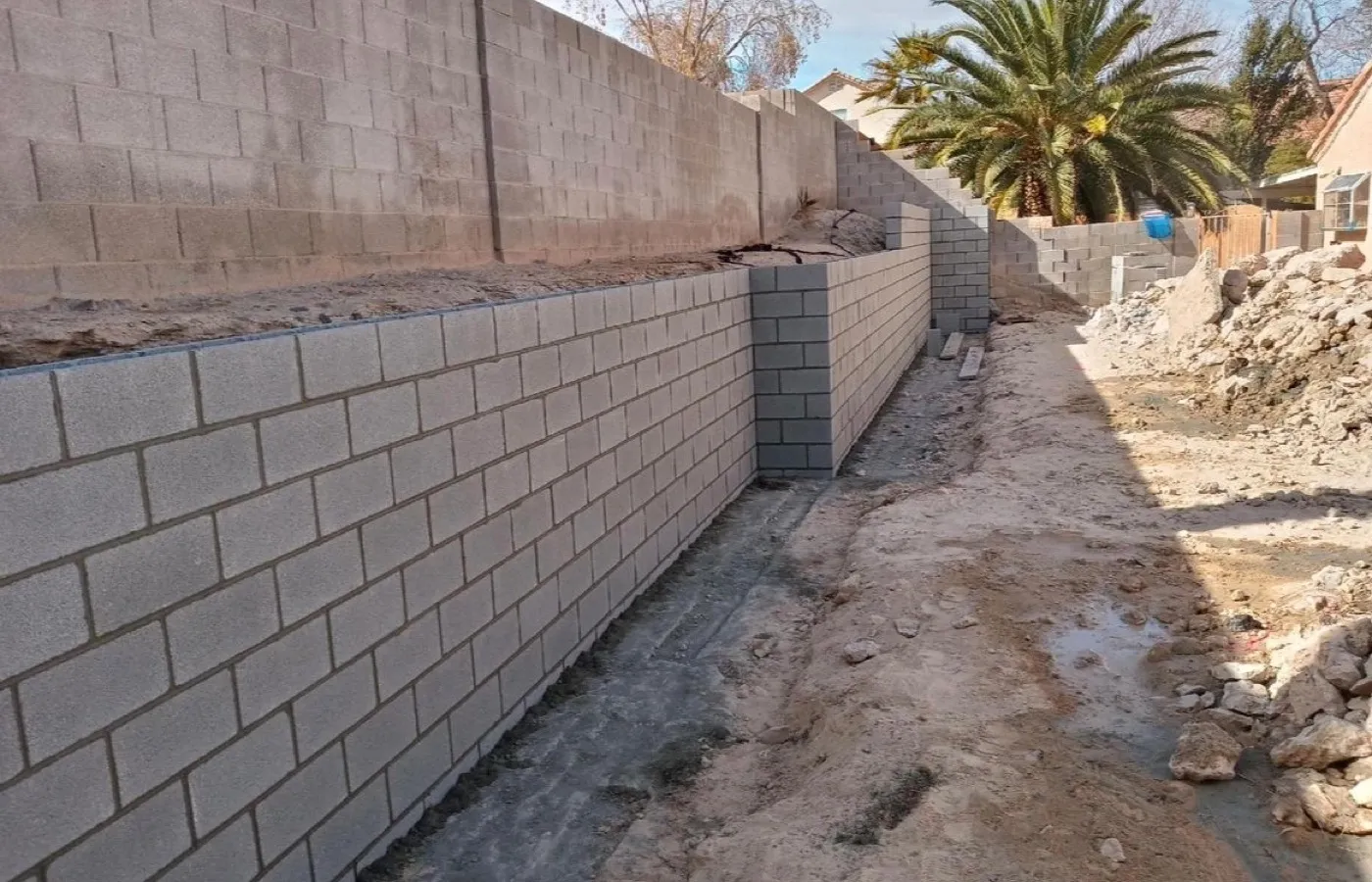
Most six foot block walls in Las Vegas are priced by the linear foot, and one national cost guide lists $90 to $180 per linear foot installed. That number covers the footing, rebar, grout, block and cap. The same guide spans $60 to $240 per linear foot across 4 to 8 foot walls, and split face block costs more per block than plain block. What moves your wall inside or past that range is height, digging conditions and access, so treat every number here as a starting point, not a quote.
What does a block wall cost by height?
Height moves the price more than any other choice. A taller wall needs a wider footing, more steel and more grout-filled cells, so the cost per foot climbs fast. One national cost guide publishes these installed ranges, footing included:
| Wall height | Published range per linear foot |
|---|---|
| 4 ft | $60 to $120 |
| 6 ft | $90 to $180 |
| 8 ft | $120 to $240 |
Las Vegas jobs tend toward the upper half of those ranges once the trench hits hard ground. Finish moves the number too. The same guide lists plaster or stucco on block at $3.00 to $4.00 per square foot of wall face, and split face block at $2 to $5 per block against $1 to $3 for standard block.
Why does caliche change the price?
Caliche is the hard, cemented layer that sits one to three feet under most valley lots, right where a wall footing has to go. One national guide prices ordinary digging at $2.50 to $15.00 per cubic yard. Rock that needs a jackhammer runs $50 to $200 or more per cubic yard. The wall guide above lists foundation trenching at $5 to $12 or more per linear foot, more in rocky soil.
The same wall on two streets can carry very different trench costs, and nobody can see the caliche from the curb. A contractor who quotes a firm price without looking at your dirt is guessing with your money. We check the ground before the number goes on paper.
What are the Clark County permit rules?
Masonry walls hit the permit desk early. In unincorporated Clark County, any block wall over 24 inches tall needs a fence permit. Wood and iron fences get a pass up to 6 feet, but block does not. A wall on the property line also needs a notarized authorization form signed by the owner on the other side.
Two inspections are built into every permitted wall. The footing gets inspected before concrete is poured, and the wall gets a pre-grout inspection before the cells are filled. Height extensions on an existing wall always require stamped engineering from a Nevada licensed design professional. A licensed contractor pulls the permit for you. Clark County issues fence permits to licensed contractors, which is one more reason to check the license number on your bid. The full rundown by city, with height limits and the wall raise rule, is in our guide to the permit and height rules for every desk in the valley.
Should you repair or replace the wall?
If the footing is sound, repair wins by a wide margin. One national guide lists retaining wall repairs at $100 to $1,500, and new block wall at $60 to $240 per linear foot installed. A full tear out and rebuild commonly runs into the thousands once demolition, haul off and a new footing are counted. Our block wall repair cost guide lines up the published ranges by repair type.
The county tips the scale further. Repairs of 20 linear feet or less, on walls 6 feet or under, are exempt from the permit entirely. A leaning wall changes the answer. Lean almost always means the footing failed, and new block on a failed footing just moves the crack. That section needs to come out and go back on new concrete.
What else moves the number?
- Demolition. Tearing out an old wall adds roughly $5 to $16 per linear foot in one national guide, plus haul off.
- Gates. Framing a gate opening costs extra for the added reinforcement and labor, and the gate itself is priced separately.
- Engineering. Walls past standard heights, and every wall raise, need stamped drawings, quoted by the engineer.
- Access. Block that moves through a side gate by wheelbarrow costs more per foot than block dropped on an open lot.
A worked example at that guide’s 6 foot range: a 60 foot property line wall at $90 to $180 per linear foot lands near $5,400 to $10,800 before permits and gates. That is a fair mental anchor for a standard Las Vegas backyard run.
What should you do next?
Measure your run, note the height you want, and take a photo of the ground along the line. Then get a written bid from a licensed contractor. Block walls are the core of our work at Ram Masonry, and walls that hold back dirt are covered on our retaining walls page. Estimates are free anywhere in the valley, and the price comes in writing. Call (702) 769-4416.